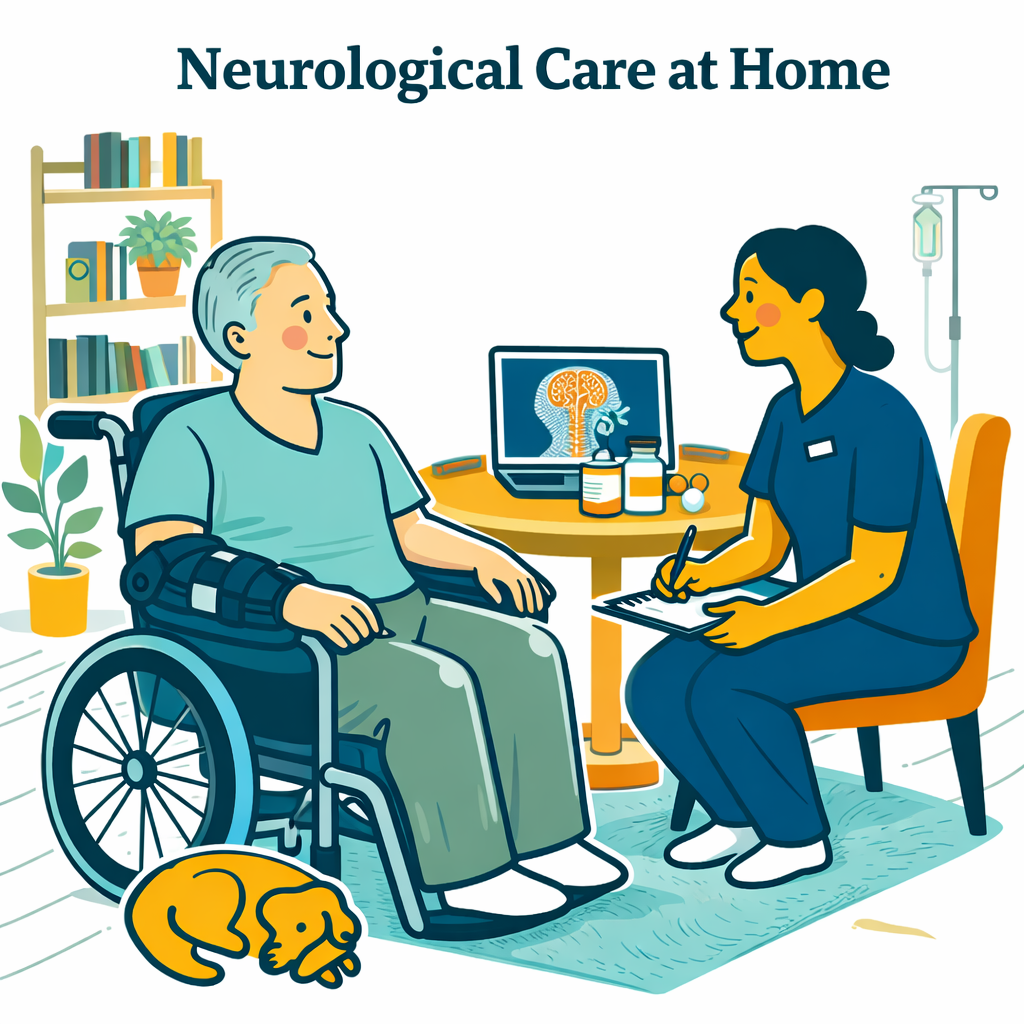
Neurological injuries

Baron Home Group offers premium neurological care in the comfort and privacy of your home. As no two individuals require the same care plan, we customize each patient’s care by aligning their needs with a professional and clinically-led team of private care nurses.

neurological home care services

In Home Neurological Care

Georgia | Texas | Alabama

Baron Home Group provides specialized in-home neurological care for individuals and families across Georgia, Texas, and Alabama. Our services are designed to support comfort, safety, and independence while receiving care in the familiar environment of home.

Because no two individuals experience neurological conditions the same way, we create personalized care plans tailored to each client’s needs, routines, and level of support. Our caregivers provide dependable, compassionate assistance that helps families feel confident and supported every step of the way.

We provide in-home support for individuals living with a variety of neurological conditions, including:

    • Multiple Sclerosis (MS)
    • Amyotrophic Lateral Sclerosis (ALS)
    • Parkinson’s Disease
    • Traumatic Brain Injury (TBI)

What is Neurological Care?

Neurological care refers to the care one receives while managing a neurological condition. Neurological care will not cure a disease; rather, it aims to provide comfort, manage pain from symptoms, and reduce the stress and anxiety that can accompany various neurological disorders.

Neurological Conditions Treated at Home by Baron Home Group

We work with patients diagnosed with one of four different neurological disorders. In this section, we define each disorder and discuss some of its associated symptoms. Please keep in mind that while there is no cure for any of the following diseases, neurological care can help manage symptoms and improve the overall quality of life for patients diagnosed with them.

Multiple Sclerosis (MS)

MS is a disabling disease that affects the brain and spinal cord. With MS, the immune system affects the protective sheath around nerve fibers, which disrupts communication between the brain and the rest of the body. Symptoms of MS can vary depending on the severity of each case. While some patients may lose the ability to walk, others may only experience minor symptoms. The following is a list of some of the most common symptoms of MS:
  • Movement-related symptoms, including trouble walking, weakness in limbs, lack of coordination, and electric shock sensations in the neck
  • Vision-related symptoms, including partial or complete loss of vision and/or blurry or double vision
  • Fatigue or dizziness
  • Slurred speech
  • Sexual, bowel, and bladder-related problems
  • Tingling and/or pain in parts of the body

Amyotrophic Lateral Sclerosis (ALS)

ALS is a progressive neurodegenerative disease that attacks nerve cells in the spinal cord and brain, which prevents the body’s muscles from receiving the nourishment they need to function. Individuals diagnosed with ALS typically have a lifespan of 2-5 years. The main symptoms of ALS revolve around the progressive loss of muscle control. Individuals with ALS slowly lose the ability to do the following on their own:
  • Eat and drink
  • Speak
  • Move
  • Grab objects
  • Breathe

Parkinson’s Disease

Parkinson’s disease is a neurodegenerative disorder that mostly affects neurons that produce dopamine, which is a chemical the nervous system uses to send signals between nerve cells. Low dopamine levels in the body can lead to a lack of control over basic motor functions, such as walking and general movement, among other things. The following are some of the most common symptoms of Parkinson’s Disease:
  • Movement-related symptoms, including trouble moving or walking, stooped posture, drooling, dizziness or fainting, and more
  • Anxiety, depression, and/or stress
  • Breathing difficulties
  • Fatigue or trouble sleeping
  • General pain or discomfort
  • Hallucinations and/or delusions
  • Memory problems, including dementia

Traumatic Brain Injury (TBI)

TBI, sometimes referred to as craniocerebral trauma, refers to a brain dysfunction caused by an outside source. Examples of outside sources include concussions, blows to the head, or something related. Two of the most common causes of TBI are car accidents and severe sports injuries. The following are some of the most common symptoms associated with TBI:
  • Cognitive-related symptoms, including trouble speaking and understanding language, amnesia, mental confusion, trouble concentrating, and more
  • Behavioral-related symptoms, including aggression, impulsivity, lack of restraint, abnormal laughing or crying, and more
  • Issues with anger, anxiety, and/or loneliness
  • Fatigue, dizziness, and/or fainting