
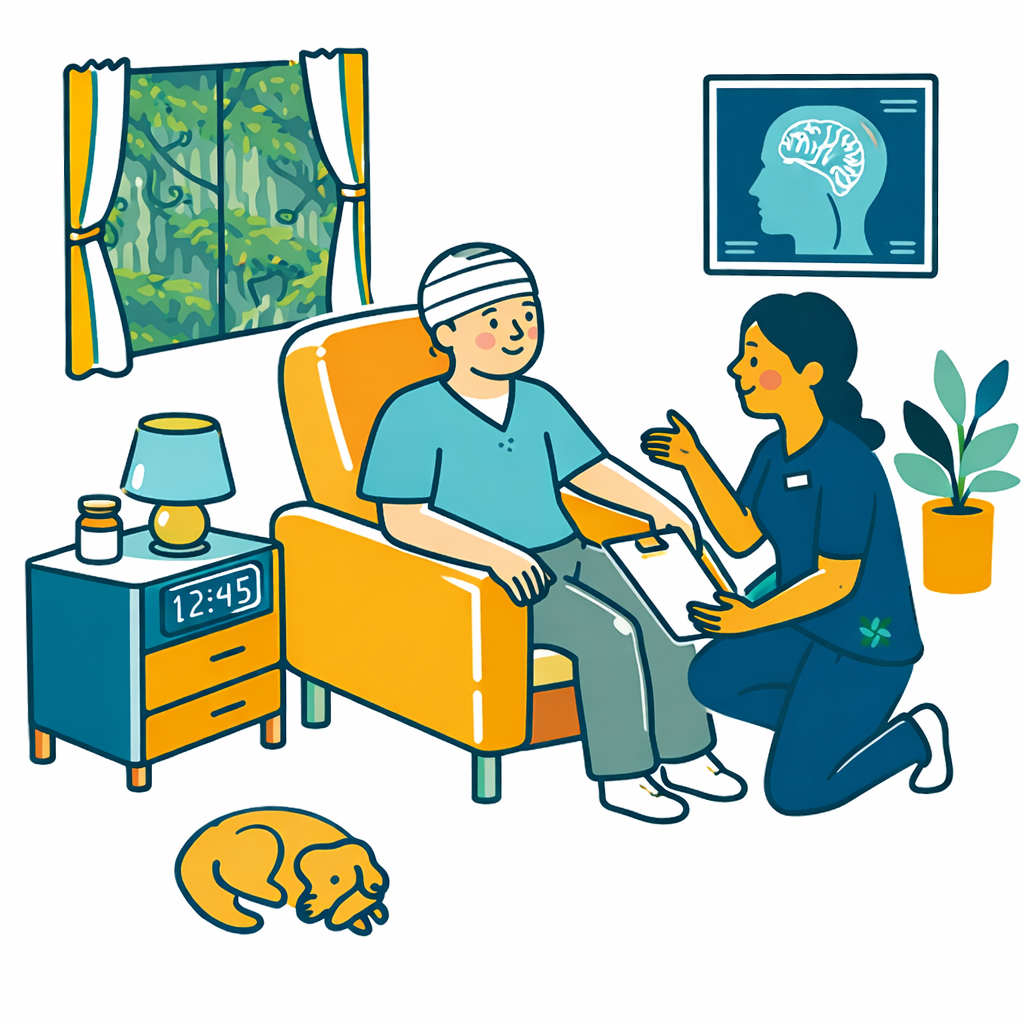
Caring for someone with a traumatic brain injury (TBI) can be an emotional and overwhelming experience. TBIs often bring sudden, life-changing challenges, and the road to recovery is rarely straightforward. As a family caregiver, it’s completely normal to experience a wide range of emotions—uncertainty, fear, frustration, and even guilt—as you adjust to new responsibilities and changing circumstances.
You may find yourself questioning whether you’re doing enough or if you’re able to meet your loved one’s needs. The truth is, caring for someone with a TBI requires time, patience, and a great deal of compassion—not just for them, but for yourself as well. Every recovery journey is different, and progress can take time.
You don’t have to navigate this alone. With the right support, including professional in-home care, families can create a safer, more structured environment while easing the physical and emotional demands of caregiving. Having dependable support allows you to focus on what matters most—being present for your loved one while ensuring they receive consistent, attentive care.
Flexible care options—including part-time, overnight, or around-the-clock support—can help ensure your loved one receives consistent assistance while giving your family peace of mind.
Caregivers provide dependable support with daily routines, safety monitoring, and structured environments that are especially important for individuals recovering from traumatic brain injuries. This may include help with mobility, reminders, and guidance throughout the day for those who may experience memory or communication challenges.
By adding professional in-home care, families can feel confident their loved one is supported while also reducing the physical and emotional demands placed on family caregivers.
Assistance with bathing, grooming, and hygiene routines while maintaining comfort, dignity, and safety.
Help with selecting and putting on clothing, supporting independence while simplifying daily routines.
Safe assistance with moving in and out of bed, chairs, and around the home to reduce fall risks.
Respectful assistance with toileting needs and bathroom routines to promote comfort and cleanliness.
Support with eating, meal setup, and reminders—especially helpful for individuals with memory or coordination challenges.
Structured daily routines, reminders, and guidance to help individuals manage tasks and stay engaged throughout the day.
Reach out to our team to discuss your loved one’s condition, daily challenges, and care needs. We’ll guide you through available options and next steps.
We develop a customized care plan tailored to the individual’s routines, cognitive needs, and level of support—focusing on safety, structure, and consistency.
We carefully match your loved one with a compassionate caregiver experienced in supporting individuals with memory, communication, and behavioral challenges.
Care begins at home with daily assistance, routine support, and ongoing adjustments as recovery progresses—ensuring consistent, reliable care.